
With the international markets facing uncertainty after Russia invaded Ukraine and Western nations retaliated with sanctions, Indian companies are putting their international fundraising plans on hold as they wait for the markets to recover. Bankers said apart from the geopolitical crisis, international rates are hardening in anticipation of interest rate hikes by the US Federal Reserve to control rising prices in the US. The Ukraine situation has implications for the market. In such a situation, international investors try to shift to safe haven assets by exiting from emerging markets.

The auditor of ABG Shipyard, which is being probed by the Central Bureau of Investigation (CBI) for the Rs 23,000-crore default to banks, had settled an investigation by the Securities and Exchange Board of India (Sebi) by paying a small settlement fee in 2019. The regulator had initiated an investigation into the fund diversion from ABG Shipyard and had asked the auditor to explain why it failed to detect fund diversion in time. In his settlement application, auditor MN Ahmed, partner of Nisar & Kumar, a chartered accountant firm, said he ceased to be an Indian citizen and has retired from the profession.

With the Adani and Jindal groups and Mukesh Ambani-owned Reliance Industries joining the race to buy Videocon Industries' (VIL's) assets, lenders are expecting aggressive bids for VIL's consumer durables and overseas oil assets, which are to be sold in separate auctions. The entire asset sale exercise is expected to be completed in the next six months, said a banker. A promoter entity of Naveen Jindal-owned Jindal Steel and Power has also evinced interest in the second round of bids for VIL's consumer durable business. The deadline to submit bids for VIL's assets ended on February 2.
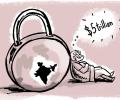
India is much better placed today to deal with future waves of the pandemic relative to the first wave, RBI deputy governor Michael Patra said.

A hallmark of some new businesses today is that they seek to use the brute force of capital, combined with smart technology and operations, to create new needs that you didn't even know existed, the chairman of Aditya Birla group said in a blog post on the trends for the new year.

Indian companies are expecting generous tax incentives from the Union Budget that will help them invest more in building capacities in the coming years. While the productivity-linked incentives (PLIs) are a good start to spur local manufacturing, the government should also take steps to boost consumer demand, which is not showing encouraging signs, say chief executive officers (CEOs) of India Inc. Statistics released by the Reserve Bank of India (RBI) shows that Indian banks had sanctioned loans worth Rs 75,558 crore in 220 new projects - a record low - in the pandemic-hit financial year ending March 2021. This is not showing any signs of a significant pick up in the last nine months of the ongoing financial year.
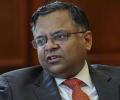
The group began to outperform the broader market only with the onset of the pandemic in March 2020 while earlier it was largely keeping pace with the Sensex. The group's market cap is up 164.4 per cent since the end of March 2020 against a 105 per cent rally in the Sensex.

The future of cryptocurrencies in India appears uncertain but that has not deterred young Indians from embracing the so-called 'fourth industrial revolution' world, where interconnectivity and smart automation, much of it relying on blockchain technology, drive human civilisation. Reserve Bank of India (RBI) Governor Shaktikanta Das has repeatedly warned of macroeconomic instability and even "serious consequences" if cryptocurrencies turn mainstream. The country's monetary authority wants a China-like total ban on crypto, not even allowing these currencies to be treated as investments. Though Parliament's website had listed the Cryptocurrency and Regulation of Official Digital Currency Bill as one seeking a total ban of cryptocurrencies in the country, it was not presented in the Winter Session. India now has the highest number of cryptocurrency investors in the world.

The Indian financial system's asset quality improved despite the pandemic, but it could be due to special dispensations by the regulator, and banks would likely see increased stress on their books once the schemes expire. According to the annual trend and progress report of the Reserve Bank of India (RBI) released on Tuesday, the data available for this financial year so far indicate that banks' bad debts have moderated while provision coverage ratios (PCRs), capital buffers as well as profitability indicators have improved relative to pre-pandemic levels.
Reserve Bank of India (RBI) deputy governor M Rajeshwar Rao on Wednesday defended the central bank's decision of not allowing industrial houses to float banks, and said more deliberations are needed before RBI changes its stance on this issue agreed back in 2001. An internal working group (IWG) of the RBI had recommended allowing industrial groups into banking, but late last month the RBI said it kept on hold the two recommendations of allowing industrial houses and large non-banks to float banks. However, RBI had accepted 21 of the 33 recommendations of the group that submitted its report a year ago.

Larsen & Toubro (L&T), India's largest construction and engineering player, has lost as many as 14 large orders in the country because companies that don't possess adequate technical expertise and experience, of late, have won the projects by bidding lower, claimed A M Naik, non-executive chairman of L&T. But the company has made up for the losses by winning projects overseas, where it has acquired a sizeable market share amid tough competition from large global players, he said.

The Reserve Bank of India's action against Reliance Capital comes at a time when the Anil Ambani group was planning to make a comeback with the group company, Reliance Infrastructure, raising funds from the promoter family. As part of the comeback plan, Reliance Infrastructure received Rs 550 crore fund infusion from the Anil Ambani family. A month earlier, Reliance Power, a listed subsidiary of Reliance Infrastructure, also raised funds from its parent by issuing preferential allotment of shares thus increasing the stake of Reliance Infrastructure in the company.

The draft amalgamation scheme of Punjab and Maharashtra Co-operative (PMC) Bank with Unity Small Finance Bank (SFB) allowed quick relief to depositors with savings of up to Rs 5 lakh, but a long wait for those who had their nest egg with the scam-tainted bank. If the scheme gets approved, 96 per cent (or 880,000 of 924,000) depositors will get their full money straightaway after PMC is merged with Unity SFB. According to the draft scheme, retail investors may get up to Rs 5 lakh from the Deposit Insurance and Credit Guarantee Corporation (DICGC) instantly, and then some more in phases till they can recall their full deposits after 10 years.

The Reserve Bank of India's retail direct scheme is off to a good start but the central bank itself sees it as an additional avenue and not an alternative to the existing one. Still, a reasonable expectation is to have at least 100,000 investors within a month of it being operational, and that could be well under way, if the latest trend is to sustain. The registration in the retail direct platform has crossed 35,000.

Tata Sons is all set to acquire a residual stake of 16.33 per cent in AirAsia India from its joint venture (JV) partner AirAsia Berhad for $19 million (or Rs 142 crore) by early next year. The valuation is in accordance with the previous transaction under which AirAsia Berhad had sold its 32.6 per cent stake, said a banking source. Tata Group had increased its stake in AirAsia India at a valuation of $115 million.

'I hope the trend is sustainable and that economic activity accelerates going forward.'

The Reserve Bank of India (RBI) unions have decided to intensify their stir demanding revision of wages, pending since November 2017, and have called for mass casual leave of employees at the central bank on November 30. However, several sources in the RBI told Business Standard that the unions may not have to go on agitation, as the new contours of the wage pact have been almost finalised and could be announced any time. An email sent to the RBI was not answered. The United Forum of Reserve Bank Officers and Employees had deferred its agitation earlier after it was told that RBI Governor Shaktikanta Das was to hold talks with the human resource management department (HRMD).

Rapid strides in digital payments notwithstanding, the Indian economy will likely remain cash-dependent for many years to come, at least that's what the automated teller machine makers and cash logistics companies are betting on. After growing at over 20 per cent for most of 2020, currency in circulation growth fell to 8.5 per cent as of October 29 this year, shows data from the Reserve Bank of India (RBI). The reason for the steep rise in currency last year was the uncertainties related to the Coronavirus (Covid-19) pandemic, where people preferred to hoard cash to meet exigencies.
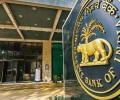
Prime Minister Narendra Modi will on Friday launch two schemes of the Reserve Bank of India (RBI) that may go a long way in changing how the household sector invests, and complains if anything goes wrong with their savings. These schemes - retail direct and an integrated ombudsman - will be launched by the Prime Minister virtually, in the presence of Finance Minister Nirmala Sitharaman. With the introduction of retail direct, a common man can directly take a position in government securities (G-Sec), considered to be the safest asset class a sovereign can offer.

'Rather than experimenting with CBDCs, we must come up with a very simple and straight design.' 'Dematerialise your currency/cash and with that dematerialised rupee allow all the transactions digitally.'
 © 2026 Rediff.com - Investor Information - Advertise with us - Disclaimer - Privacy Policy - Sitemap - Feedback - About us - Terms of use - Grievances